
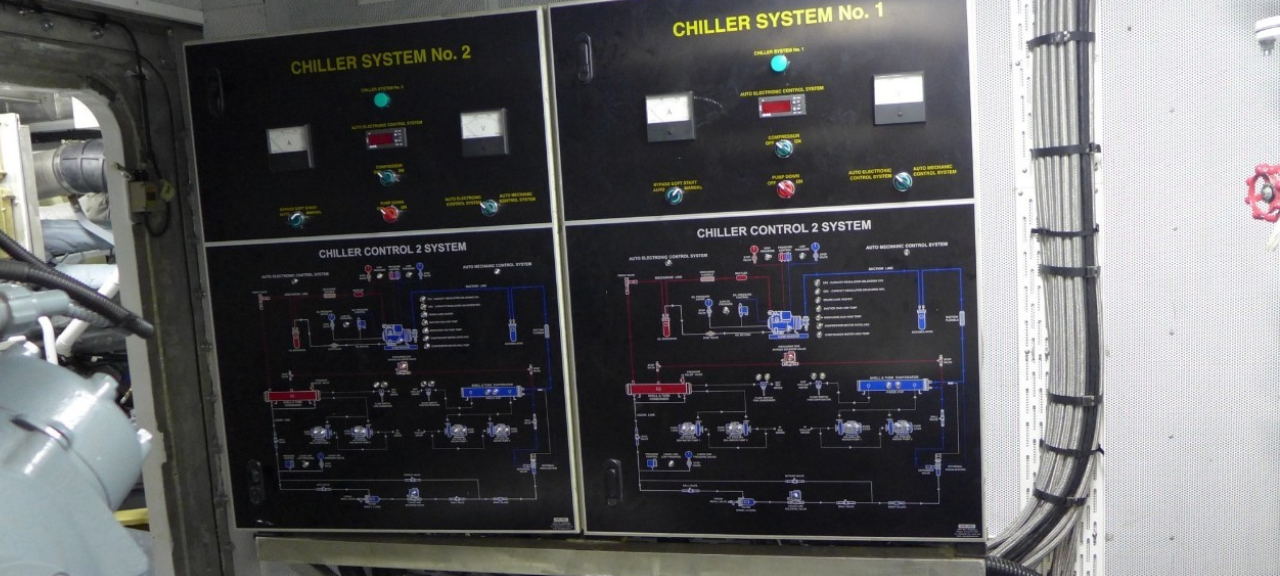
A marine cooling system must operate continuously under harsh conditions with high humidity and salinity, making it prone to operational issues. Without regular maintenance, these problems can impair engine performance and jeopardize navigational safety.
Below are common issues encountered in marine cooling systems and critical points to monitor:
Scale and Fouling
Scale buildup and fouling are frequent challenges, especially in seawater-cooled systems, which contain high levels of dissolved minerals and contaminants.
Over time, this accumulation leads to:
- Reduced heat transfer rates
- Contaminated internal surfaces of pipes and equipment
- Decreased heat exchanger efficiency
Failing to clean the system periodically forces it to work harder and drives up energy consumption.
Pipe Blockage
Clogging and blockage are typically caused by:
- Sediment
- Rust and corrosion debris
- Marine dirt and marine growth
When pipes become blocked, the coolant flow rate drops, directly undermining heat dissipation efficiency.
Common symptoms include:
- Irregular coolant flow
- Abnormal system pressure readings
- The system operating under heavier loads than normal
Reduced Cooling Efficiency
A decline in cooling performance often results from cumulative factors, such as:
- Progressive foulant accumulation
- Component wear and degradation
- Poor fluid circulation
When cooling capacity falls below optimal levels, it causes:
- Elevated engine operating temperatures
- Reduced overall operational efficiency
- Increased risk of long-term mechanical damage
Engine Overheating
Overheating is the most severe problem and typically stems directly from cooling system failures, such as:
- Insufficient coolant levels
- Malfunctioning water pumps
- Severe blockages within the system
- Inefficient or fouled heat exchangers
Potential consequences include:
- Severe engine damage
- Immediate shutdown of the vessel
- Extremely high repair costs
Most marine cooling system failures start with minor issues, such as dirt buildup or localized blockages. If left unaddressed, they can escalate into major problems affecting both the engine and navigational safety.
Regular inspections, routine preventative maintenance, scheduled flushing, and proper care of key components help mitigate operational risks, boost efficiency, and extend the lifespan of the entire system.

