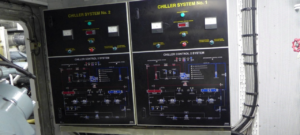
In-Depth Look at Air Conditioning Systems on Passenger Ships and Ocean Liners
Whether traveling on a river ferry, a massive cruise liner, or a giant ocean-going vessel braving weeks of open-sea monsoons, one indispensable feature for passenger and crew comfort is the Air Conditioning (AC) system.
However, marine AC systems differ significantly from standard home air conditioners. They must withstand far harsher conditions, including intense offshore solar heat, high humidity, and, most critically, corrosive saltwater environments.
Here is how these systems operate behind the scenes to deliver cool, comfortable air at sea.
1. Key Components of Marine AC Systems
To understand how the system works, here are its primary components:
- Chiller: The central core of the system. It cools fresh water (chilled water) to serve as the heat-transfer medium.
- Piping System: A distribution network of pipes that delivers chilled water from the chiller to guest cabins and common areas throughout the ship.
- Air Handling Units (AHU) / Fan Coil Units (FCU): Installed across individual cabins and communal spaces. These units draw warm room air across a cooling coil circulated with chilled water, supplying cooled air back into the room.
2. Operational Process of Marine AC Systems
The most widely used design on large ocean-going vessels is the Chiller System, which operates through the following steps:
- Chilling Process: Inside the chiller, a compressor compresses the refrigerant to high pressure and temperature. The refrigerant then flows through a condenser cooled by seawater, which absorbs the heat and causes the refrigerant to condense from gas into liquid. Next, the liquid refrigerant passes through an expansion valve into an evaporator, where it absorbs heat from fresh water (chilled water loop). This chills the fresh water while causing the refrigerant to evaporate back into gas before returning to the compressor.
- Chilled Water Distribution: The chilled water produced in the evaporator (typically at around 6–7°C) is circulated by water pumps through the piping network to AHUs and FCUs throughout the ship.
- Space Cooling: Inside each AHU or FCU, a fan draws warm air from the room over the cooling coil circulated with cold water, cooling the air before discharging it back into the living space.
- Heat Return Cycle: Having absorbed heat from the interior air, the water warms up (to approximately 12–13°C) and returns to the chiller to be re-cooled, repeating the closed-loop cycle continuously.
3. Operational Challenges and Maintenance
Maintaining marine AC systems is critical due to severe environmental conditions and the demand for continuous, 24/7 operation.
- Seawater: A major source of corrosion. The seawater-cooled condensers require frequent inspection, descaling, and cleaning.
- Humidity: High marine humidity fosters mold and bacterial growth, requiring regular cleaning and sanitization of cooling coils and air ducts.
- Vibration: Continuous vessel vibration can induce mechanical fatigue, potentially causing refrigerant leaks and structural equipment failure.